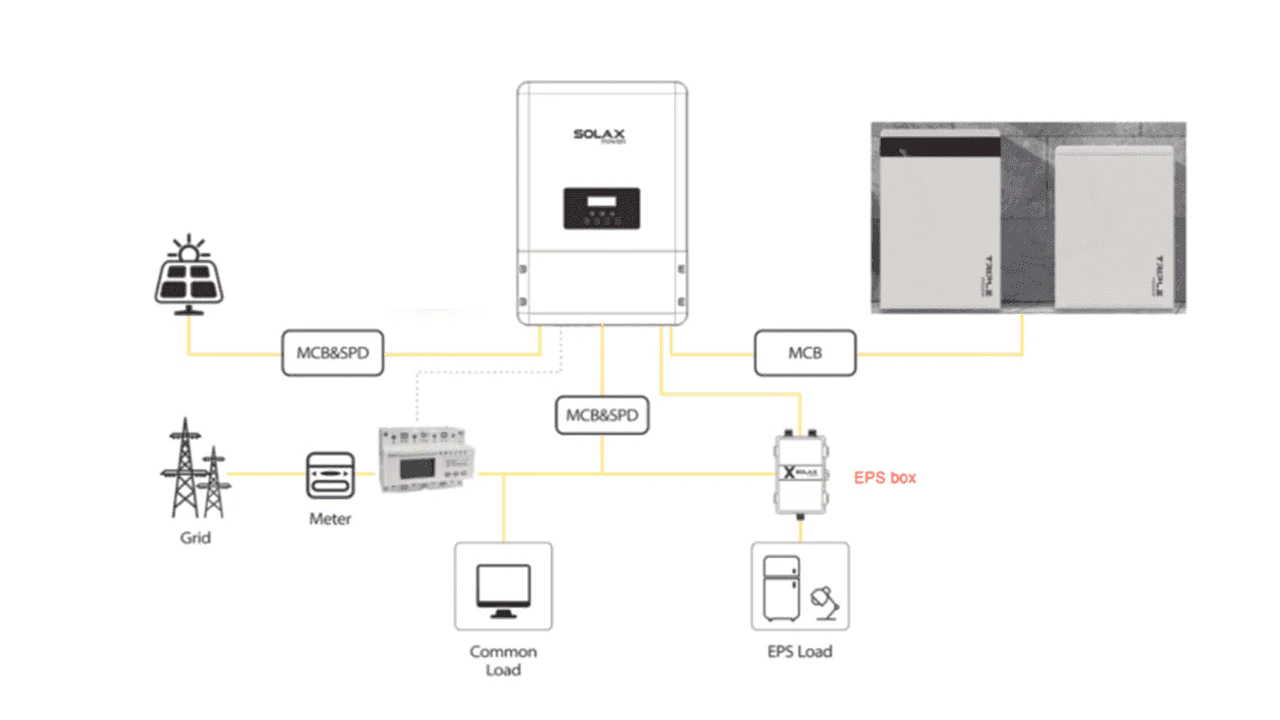
3ph EPS critical loads backup package for power cuts
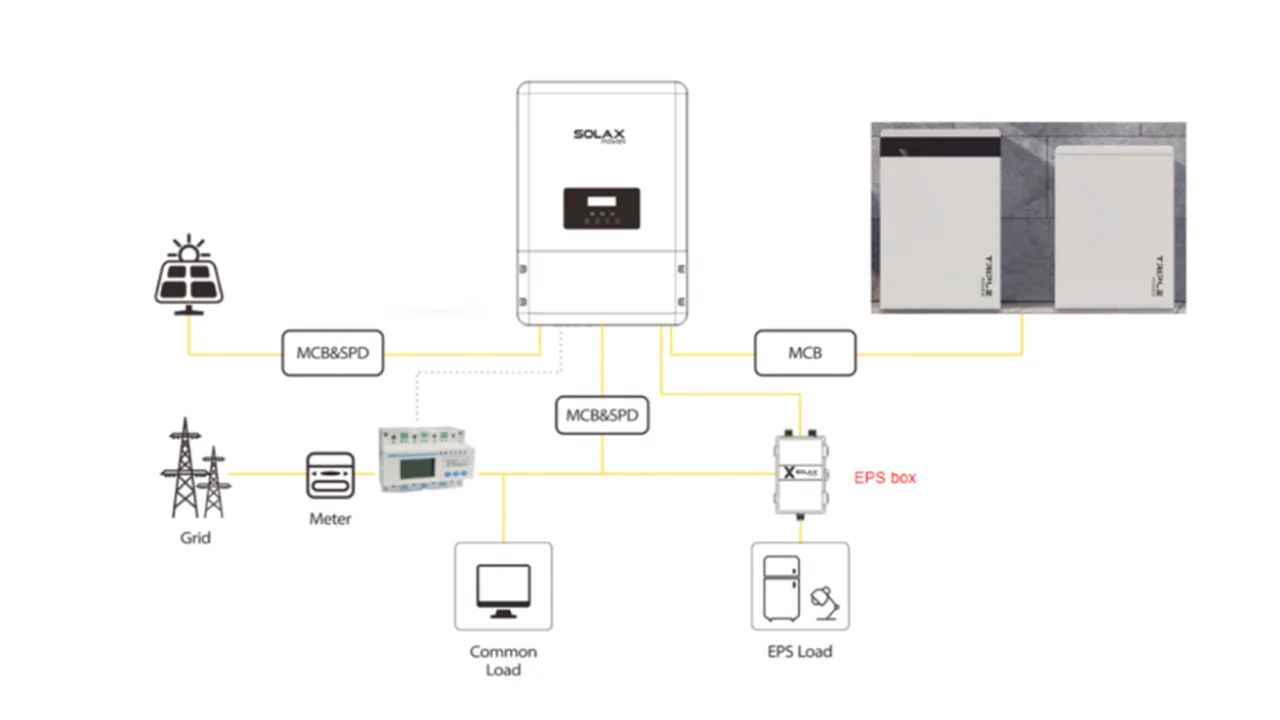
The package includes a new sub-board with the necessary re-wiring of the critical load to the EPS output of the inverter for power during outages.
Critical Load Sub-Board for Backup Power
Please note: This product is only available to purchase together with our installed systems.
A critical load sub-board (also known as a critical load panel) is a dedicated electrical panel that supplies power only to your essential circuits during an outage. Instead of backing up your entire property, it prioritises vital appliances such as refrigerators, lighting, Wi-Fi, medical equipment, and communication devices, making your backup power system more efficient and cost-effective.
How EPS Setup Works with a Critical Load Sub-Board
-
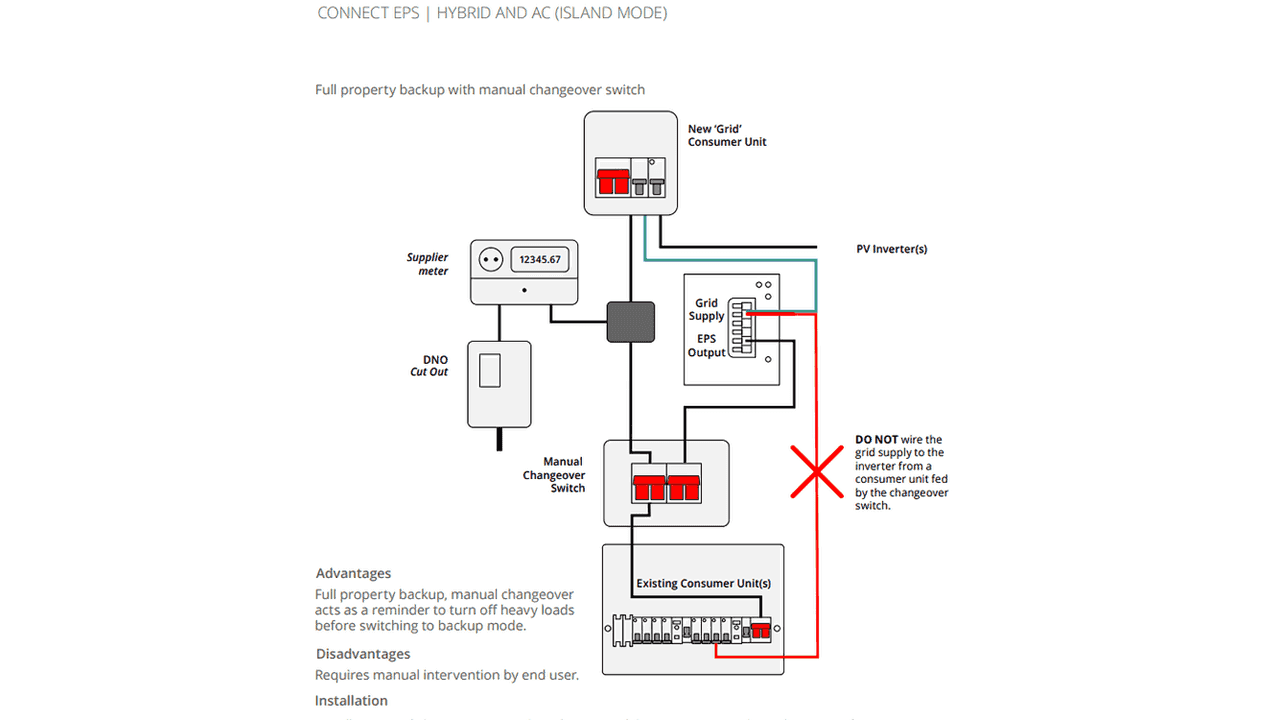
Separate Critical Load Panel Installation – Essential circuits are transferred from your main consumer unit to a dedicated critical load panel, ensuring backup power is directed only where needed.
-
Power Source Switching – A manual or automatic transfer switch (ATS) controls the supply. In normal operation, the panel runs from the grid. During a power cut, it disconnects from the grid and connects to your battery inverter or generator.
-
Battery & Inverter Integration – Solar batteries store energy and the inverter converts DC to AC power, supplying only the critical load panel during an outage. Batteries recharge from solar panels, the grid, or a generator.
-
Load and System Sizing – You select which circuits are critical based on the battery and inverter capacity. Typical loads include refrigeration, Wi-Fi, lighting, and medical devices. This targeted setup reduces battery size and cost compared to whole-home backup.
-
Smart Load Control (Optional) – Advanced systems may include smart load panels (e.g., Span, Lumin) for real-time monitoring and control, allowing you to manage loads directly from your phone or computer.
Advantages of a Critical Load Sub-Board
-
Cost Efficiency – Only powers essential circuits, reducing battery and inverter size requirements.
-
Longer Battery Runtime – Fewer loads mean extended backup duration.
-
Simplified Installation – Clear separation of critical loads makes system design and operation easier.
-
Seamless Power Transfer – Automatic transfer switches ensure safe and quick switching during outages.
-
Future Expandability – Easily upgrade by adding more circuits or expanding storage capacity.
Original: $876.53
-65%$876.53
$306.79Product Information
Product Information
Shipping & Returns
Shipping & Returns
Description
The package includes a new sub-board with the necessary re-wiring of the critical load to the EPS output of the inverter for power during outages.
Critical Load Sub-Board for Backup Power
Please note: This product is only available to purchase together with our installed systems.
A critical load sub-board (also known as a critical load panel) is a dedicated electrical panel that supplies power only to your essential circuits during an outage. Instead of backing up your entire property, it prioritises vital appliances such as refrigerators, lighting, Wi-Fi, medical equipment, and communication devices, making your backup power system more efficient and cost-effective.
How EPS Setup Works with a Critical Load Sub-Board
-
Separate Critical Load Panel Installation – Essential circuits are transferred from your main consumer unit to a dedicated critical load panel, ensuring backup power is directed only where needed.
-
Power Source Switching – A manual or automatic transfer switch (ATS) controls the supply. In normal operation, the panel runs from the grid. During a power cut, it disconnects from the grid and connects to your battery inverter or generator.
-
Battery & Inverter Integration – Solar batteries store energy and the inverter converts DC to AC power, supplying only the critical load panel during an outage. Batteries recharge from solar panels, the grid, or a generator.
-
Load and System Sizing – You select which circuits are critical based on the battery and inverter capacity. Typical loads include refrigeration, Wi-Fi, lighting, and medical devices. This targeted setup reduces battery size and cost compared to whole-home backup.
-
Smart Load Control (Optional) – Advanced systems may include smart load panels (e.g., Span, Lumin) for real-time monitoring and control, allowing you to manage loads directly from your phone or computer.
Advantages of a Critical Load Sub-Board
-
Cost Efficiency – Only powers essential circuits, reducing battery and inverter size requirements.
-
Longer Battery Runtime – Fewer loads mean extended backup duration.
-
Simplified Installation – Clear separation of critical loads makes system design and operation easier.
-
Seamless Power Transfer – Automatic transfer switches ensure safe and quick switching during outages.
-
Future Expandability – Easily upgrade by adding more circuits or expanding storage capacity.